
What Is an AI Factory?
AI Factory infrastructure explained — from GPU orchestration to the data center design decisions that make industrial-scale AI production possible.
Published
- Artificial Intelligence
- GPU
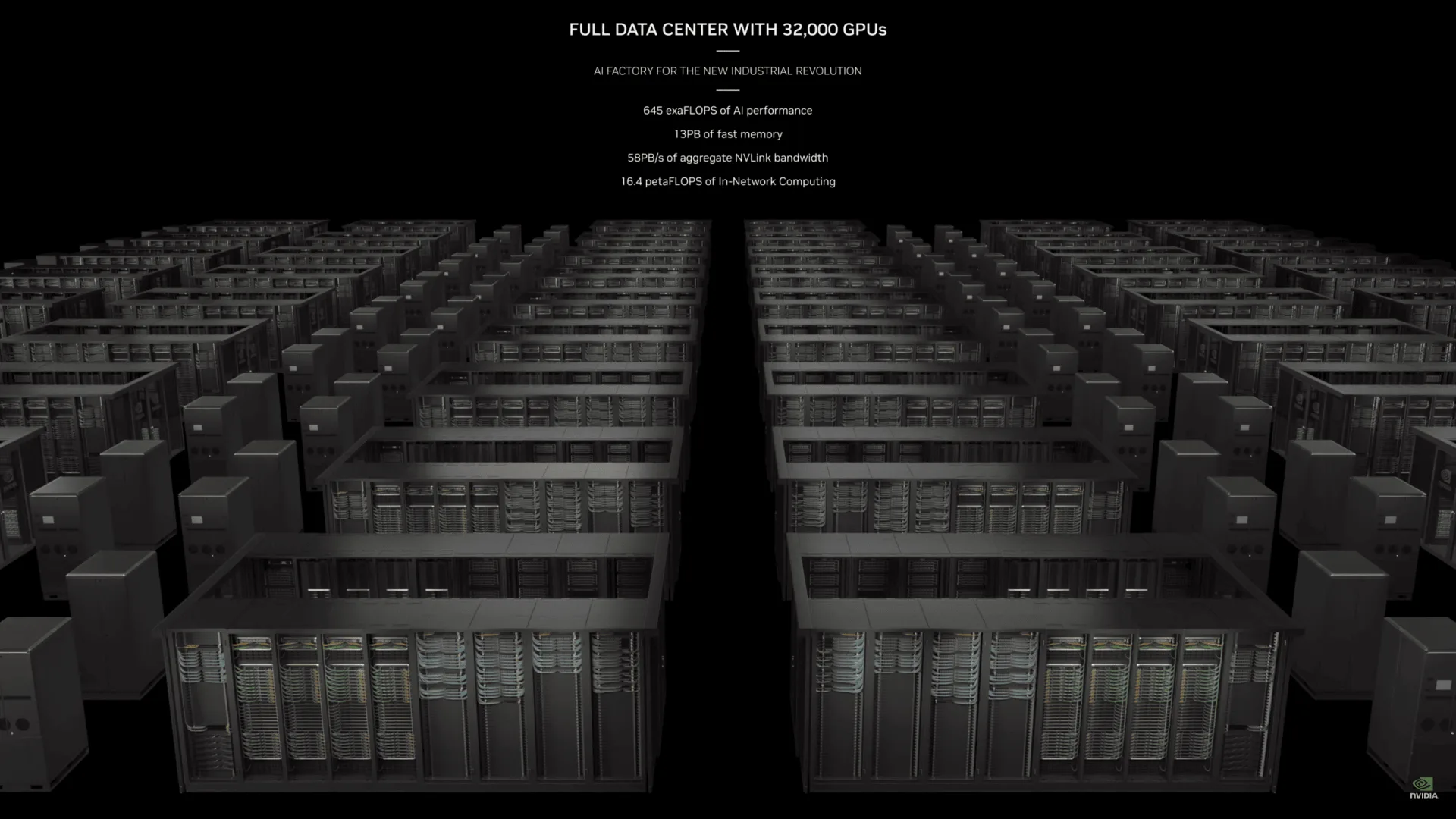
An AI Factory is IT infrastructure purpose-built for continuous, industrial-scale AI production. A conventional factory takes in raw material and ships finished goods; an AI Factory takes in raw data, processes it through high-performance GPUs, and ships a model ready for production — then loops back to train the next one.
The difference from a general-purpose data center comes down to intent. A conventional data center is built to keep websites, databases, and office systems stable under moderate, steady load. An AI Factory is built for thousands of GPUs running at full utilization simultaneously, which pushes networking, storage, and cooling well past what general infrastructure can absorb. Drop a GPU cluster onto conventional infrastructure and the result is predictable: GPUs sit idle waiting on data, the power bill runs at full tilt, and the work doesn’t come back proportionally.
Three Core Components
High-Performance Networking
Training a large model splits the work across many GPUs, and those GPUs have to talk to each other constantly. A slow network means every GPU waits, and the whole job slows down with it.
The core technology is InfiniBand or RoCE v2-capable Ethernet for ultra-low latency, paired with GPUDirect RDMA so GPUs exchange data directly without routing through the CPU — cutting steps and overhead out of the path. A non-blocking fat-tree topology keeps every GPU pair moving at full bandwidth simultaneously across the whole cluster, with no chokepoint in the middle.
High-Performance Storage
How fast a GPU trains depends on how fast data reaches it. Multi-terabyte datasets need to hit every GPU node simultaneously, every epoch. A parallel file system such as CephFS or Lustre splits files into small chunks read concurrently across many servers, delivering aggregate throughput in the hundreds of GB/s. The goal is singular: no GPU sits idle waiting on disk.
Data Center Design: Power and Cooling
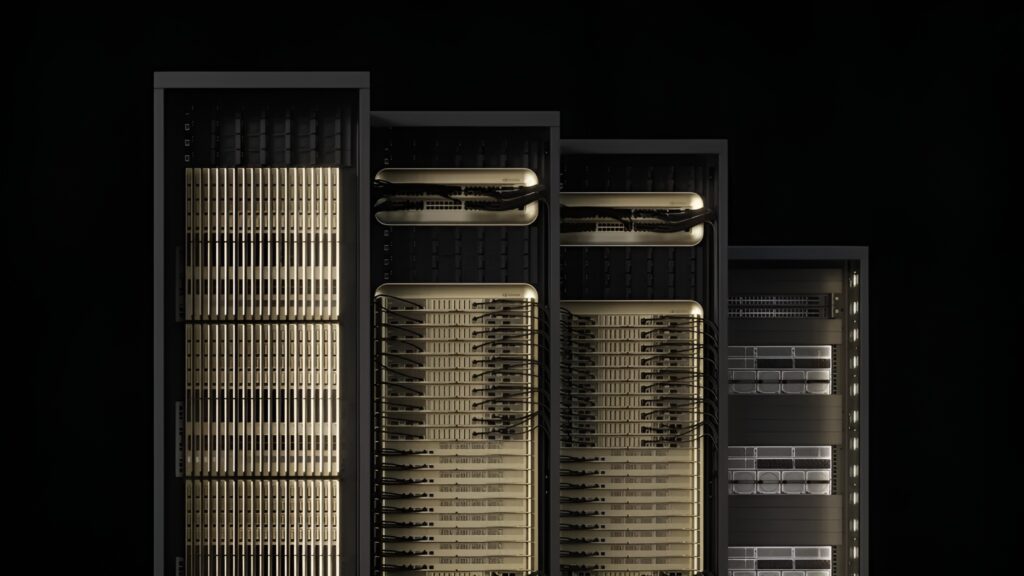
A GPU server rack draws 40–100+ kW, several times a conventional rack. Standard air cooling can’t keep up, which is why liquid cooling or rear-door heat exchangers pull heat away from the hardware directly — alongside power capacity and floor load-bearing planned in from the start.
Features That Make It Work in Practice
GPU orchestration — Kubernetes queues work and allocates GPUs across multiple teams, including splitting a single GPU into multiple instances for smaller jobs. No resources sit idle.
Automated pipeline — an MLOps system runs train, test, and deploy continuously and automatically, so new model versions reach production faster.
Scalability — start with a handful of GPUs and expand toward supercomputer scale without redesigning the system.
Resiliency — training a large model can take days to weeks. Checkpointing captures state periodically, so a fault-induced failure resumes from the most recent checkpoint instead of starting over.
What It Means for an Organization
Data sovereignty — data stays inside infrastructure the organization controls, which matters for internal documents, customer data, or anything regulation requires to stay in-country. Latency also drops because data sits close to the user.
Better control over compliance — security policy, access control, and logging all stay in the organization’s own hands, adjustable to whatever standard applies to that industry.
Lower long-term TCO — for workloads that run continuously around the clock, owned infrastructure paid for once and used continuously tends to cost less over time than public cloud billed for constant usage. Organizations with genuinely continuous workloads should run that break-even calculation against their own numbers.
Building in-house AI capability — teams develop models from their own data continuously. Two clear examples: an enterprise LLM trained on internal documents that can’t leave the building, and computer vision workloads reading and writing large volumes of video files simultaneously.
Summary
An AI Factory is infrastructure designed end to end for AI work specifically — networking that lets GPUs talk fast, storage that keeps data flowing, racks and cooling built for heavy power draw, and orchestration tying it together to run continuously and automatically.
Zotect works in AI Infrastructure from facility, networking, and storage planning through GPU cluster deployment and Kubernetes-managed workloads. See AI Infrastructure or get in touch.